Competitor monitoring: the ongoing watch & the best competitor analysis tools
Competitor monitoring is the ongoing process of tracking & analyzing rival companies: their prices, products, campaigns, hiring & everything else they publish while assuming nobody reads it. Done on a calendar, it converts the market from a series of surprises into a feed.
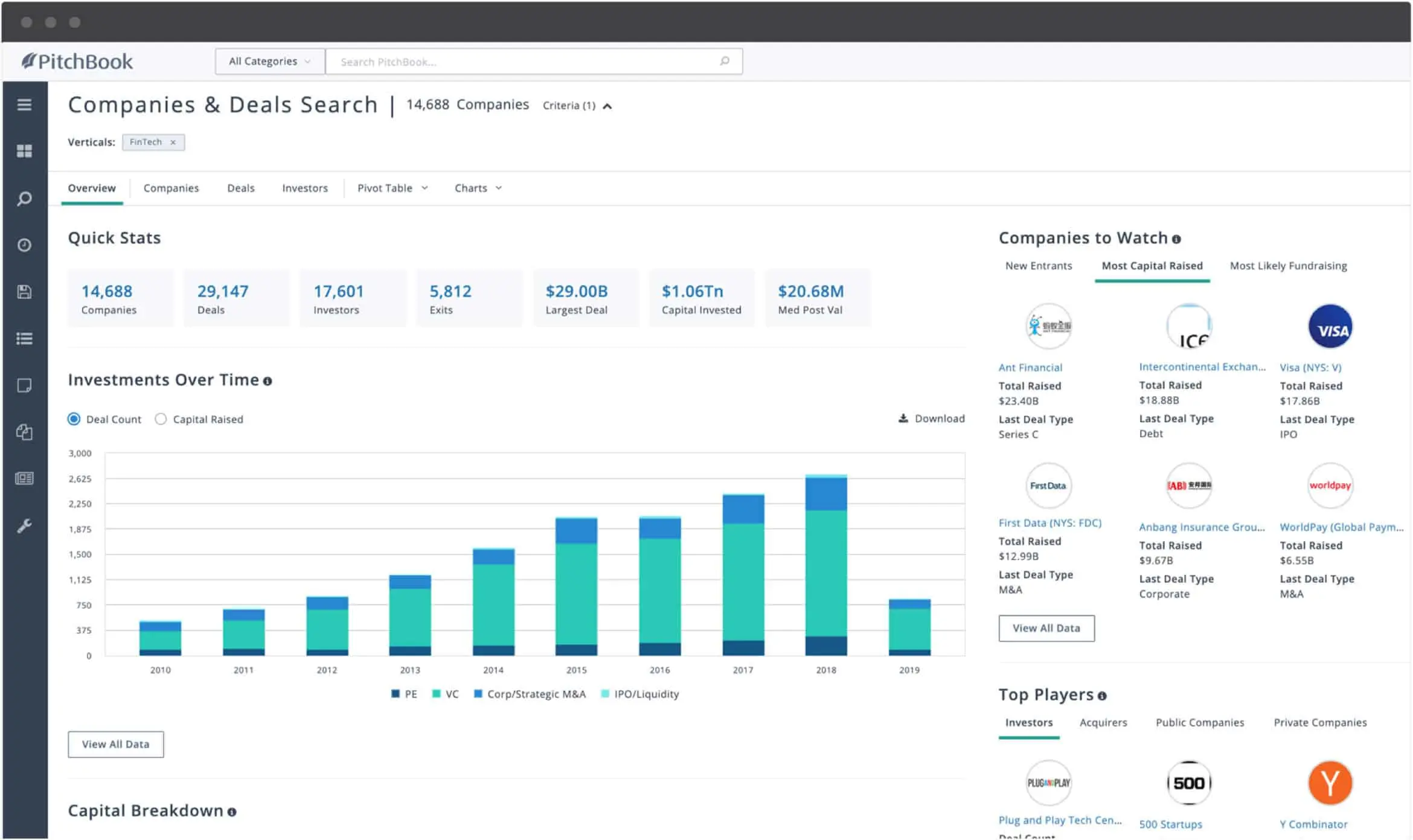
The tooling around it has become an industry. The social media analytics market alone grew from $13.8B in 2024 to $17.4B in 2025, and the wider stack of competitor analysis tools now covers every public surface a rival touches.
This page covers what to monitor, the best competitor analysis tools by job, how to choose among them, the workflow that keeps the watch alive, the ethics line & how to measure whether any of it pays.
KEY FACTS
- The social media analytics market grew from $13.8B in 2024 to $17.4B in 2025.
- Semrush offers over 25 billion keywords across 43 countries; Ahrefs runs a larger keyword database than rivals claim.
- Similarweb analyzes 2 TB of data daily for market insights.
- Klue's Auto Insights suite automates competitor data collection & analysis.
- Ethical monitoring runs on public information sources only.
What is monitoring competitors?
Monitoring competitors means tracking their visible moves continuously & converting the record into competitive intelligence: alerts today, trend analysis over quarters, a searchable memory forever. Identifying direct & indirect competitors comes first, since the panel defines the watch.
The practice differs from one-off competitor research the way a security camera differs from a photograph. Competitor analysis captures a moment; competitor monitoring captures the motion, and the motion is where competitor strategies reveal themselves.
The payoff compounds. Effective competitor monitoring helps businesses spot emerging threats, discover untapped market gaps & respond to market shifts while responding still counts; competitor insights inform strategic decision-making across pricing, product, marketing & sales at once.
Why competitor monitoring pays
The case is arithmetic. A missed price move costs a quarter of deals; a missed launch costs a positioning cycle; competitor monitoring costs a subscription & a weekly hour. Teams that monitor competitors on a calendar buy back the response time everyone else spends catching up.
Competitor activity is also the fastest read on the market itself. Industry trends show up as synchronized competitor activity before analysts name them, market trends surface in what several rivals build at once, and the monitoring feed catches the synchrony while each single move still looks random.
The valuable insights arrive as deltas. One rival's edit is noise; the same edit across three competitor analysis tools' feeds is a market turning, and the competitive analysis that names it early is worth the whole year's tooling bill.
The compounding is the quiet part. Every quarter of competitor activity filed makes the next quarter's anomalies more visible, industry trends easier to date & the actionable insights faster to produce; the competitive edge is mostly a head start, renewed weekly.
What to monitor
Six surfaces cover most of what rivals reveal about themselves, and each maps to its own corner of the toolstack.
Pricing & promotions
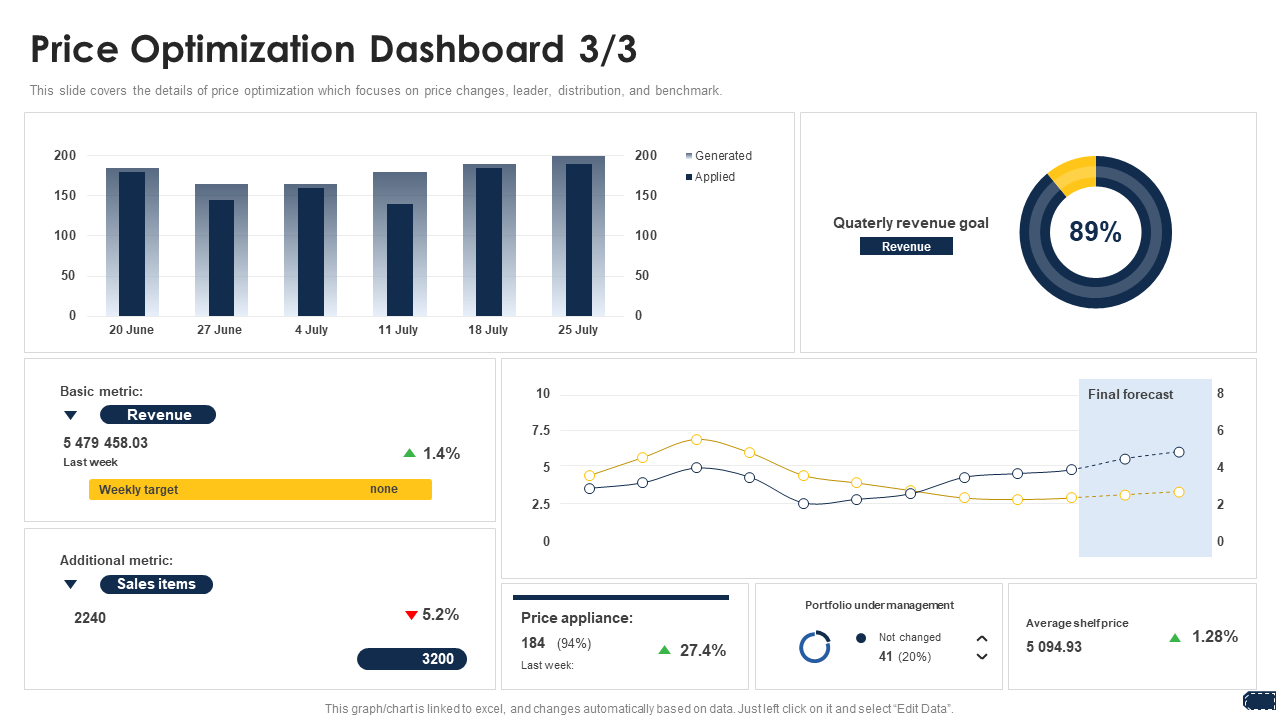
Tracking pricing & promotional offers is the highest-stakes lane, because competitor pricing changes reprice your deals the same week. Watch list prices, tiers, discounts & bundling, and date every capture; the pricing strategy behind the edits shows in the sequence, and the sequence only exists if somebody kept it.
Product launches & features
Businesses should monitor product launches & feature updates as a standing feed: changelogs, release notes, docs & the announcements between them, plus the beta programs that precede all three. Evaluating competitors requires examining their pricing, products & customer satisfaction together, since features move all three.
Websites & digital presence
Monitoring digital presence involves tracking social media & website activity as one lane. Competitor websites change quietly, and the diffs carry the strategy: repositioned homepages, new case-study logos, a segment page appearing weeks before the sales team starts hearing about it in deals.
Social media & brand mentions
Social media carries rivals' campaign themes, audience courtship & the complaints their customers post in public. Brand mentions & engagement metrics per rival make the comparative read, and the same feed powers share-of-voice math & influencer campaign analysis where that channel matters.
Hiring & teams
Monitoring hiring trends signals upcoming product releases or market expansions before any announcement: roles, locations & counts read as a roadmap. A rival hiring ten ML engineers is telling you the roadmap in job-posting form, complete with the seniority mix that dates the ship date.
Marketing campaigns & ads
Monitoring marketing campaigns explains competitors' advertising strategies: which messages run, where, against which audience demographics. Ad libraries make the creative public, and the spend patterns behind them show in frequency, duration & the audiences the targeting implies.
Competitor monitoring tools vs manual tracking
Manual tracking works at panel-of-three scale & a weekly hour: bookmarks, alerts, a spreadsheet with dates. Competitor monitoring tools take over when the panel, the surfaces or the stakes outgrow the hour.
The tools win on three jobs. Coverage, because competitor monitoring tools watch pages, feeds & filings at once without fatigue; memory, because historical data per rival accumulates automatically & the raw data stays queryable; and processing, because rivals publish unstructured data by the ton, and machines pre-sort unstructured data into the key metrics humans decide on.
Manual keeps one advantage: judgment density. A person reading a rival's pricing page reads intent; competitor monitoring tools read diffs. The working setup pairs them, tools for capture & competitor data hygiene, people for meaning.
Cost the comparison honestly. An analyst-hour is expensive & finite; competitor monitoring tools bill flat & scale sideways; and the break-even sits around the second rival or the third surface for most teams, which is why the competitor analysis tools market keeps growing through every budget cycle.
The best competitor analysis tools, by job
No single analysis tool covers all six surfaces, so the market splits by job: competitive intelligence platforms for the full watch, SEO suites for search, social tools for conversation, trackers for pages & prices. The tools below anchor each lane.
Klue
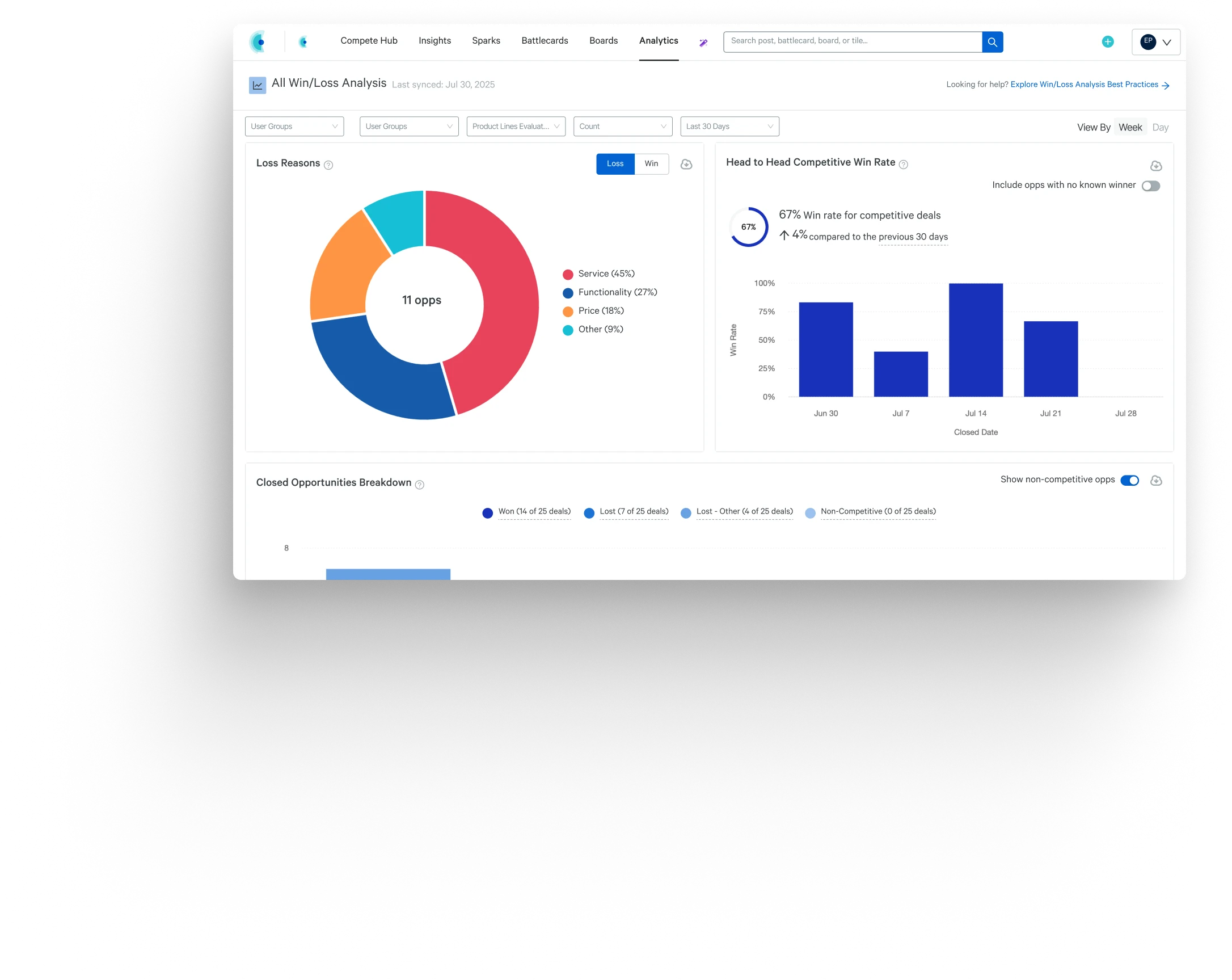
Klue is a competitive intelligence platform built for revenue teams: monitoring, battlecards & win/loss in one system. Klue's Auto Insights suite automates competitor data collection & analysis, and its Compete Agent runs in the background to generate insights without an analyst driving.
Where it fits
Teams that need competitor activity routed into the CRM & sellers armed mid-deal. As an analysis tool it leans enablement-first, and AI updates arrive in real time.
Crayon
Crayon automates tracking of competitor activities across websites, reviews, ads & filings, with AI scoring what deserves attention. It pairs broad capture with battlecard delivery, and the automated monitoring provides real-time updates on competitor changes.
Where it fits
Programs that want the widest automated net plus enablement output. A strong best competitor analysis tool candidate for mid-market & enterprise teams.
Visualping
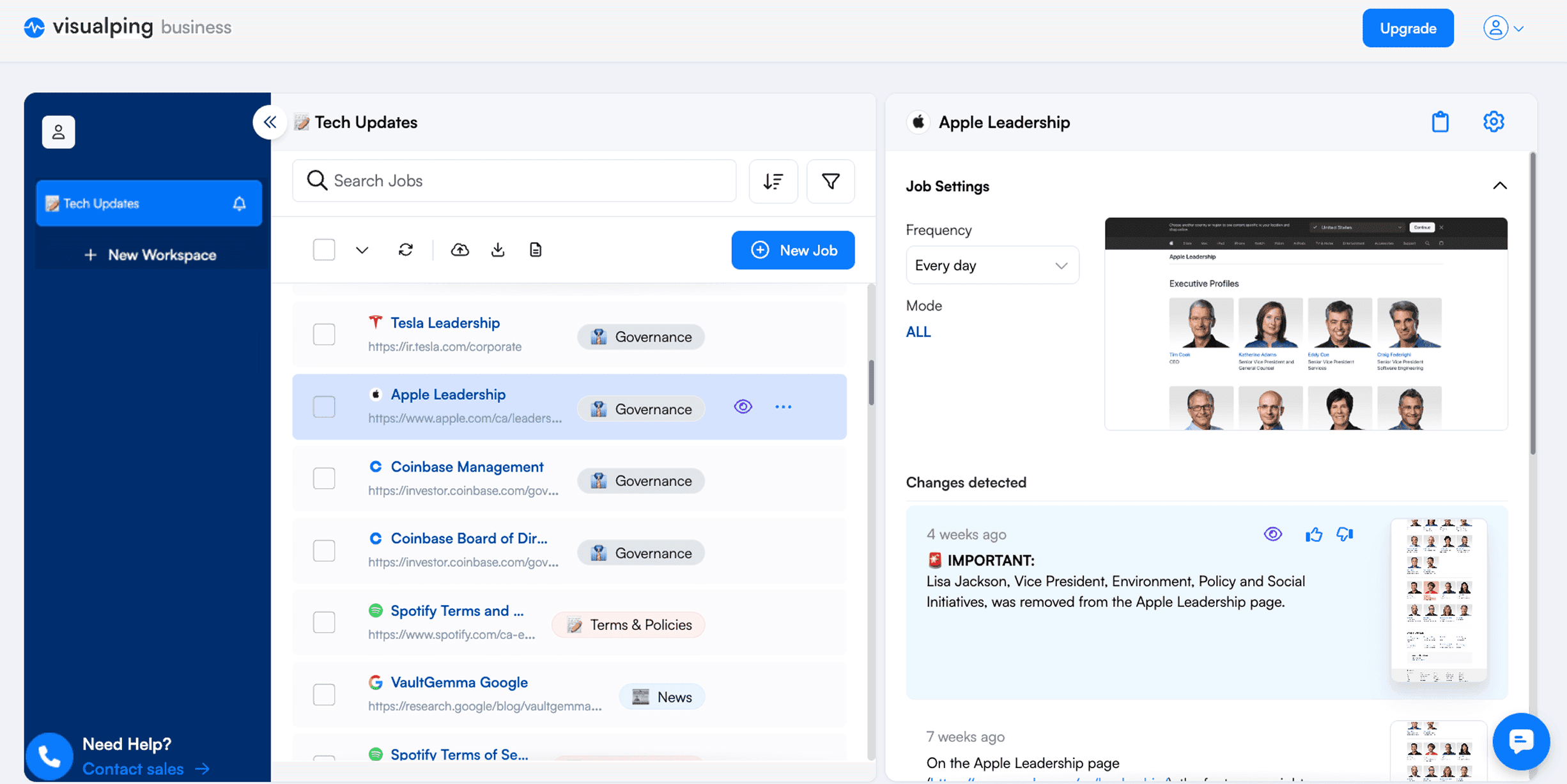
Visualping tracks visual changes on competitor pages automatically: pricing tables, leadership pages, terms, docs. It alerts on competitor pricing model changes the day they ship rather than the week the market notices, and it stays the simplest analysis tool in the stack to wire.
Where it fits
Zero-analyst teams & anyone who wants page-level certainty. Point it at ten URLs and the watch runs itself.
Prisync
Prisync is a competitor price monitoring analysis tool built for commerce: real-time price & stock tracking across rivals' catalogs, with repricing rules on top. Where price is the battlefield, this lane is the whole war.
Where it fits
Ecommerce & retail catalogs with SKU-level fights. Google Merchant Center complements it free, showing how your pricing compares to competitors inside the shopping channel itself.
Sprout Social
Sprout Social reads the social lane: competitors' brand mentions, sentiment & posting performance charted beside your own accounts, week over week. It provides insights into rivals' engagement patterns, and its reports make the social media comparison a standing chart rather than a quarterly project.
Where it fits
Marketing teams that live in social media management already & want the competitive read in the same analysis tool they publish from.
Hootsuite
Hootsuite analyzes public social conversations for competitor strategies: streams per rival, keyword tracking across channels, team workflows on the responses & assignments. As an analysis tool it trades depth for breadth & price.
Where it fits
Teams monitoring many rivals lightly across social media rather than a few deeply.
Ahrefs
Ahrefs is the backlink & keyword research heavyweight, with a larger keyword database than its competitors by its own published counts, & content gap tooling that names the queries rivals rank for & you don't. SEO tools like Ahrefs track keyword rankings for valuable terms per rival, week over week.
Where it fits
Content strategy & SEO performance work: content gaps, backlink strategies & the search visibility war. For organic-first businesses it's the best competitor analysis tool on the shelf.
Semrush
Semrush offers over 25 billion keywords across 43 countries, plus advertising research, traffic estimates & position tracking in one analysis tool, which explains its default status in agency stacks. Its competitor dashboards read search, paid & content in a single view.
Where it fits
Teams that want keyword research, ads & competitor tracking under one login, and marketing data joined instead of exported.
Similarweb
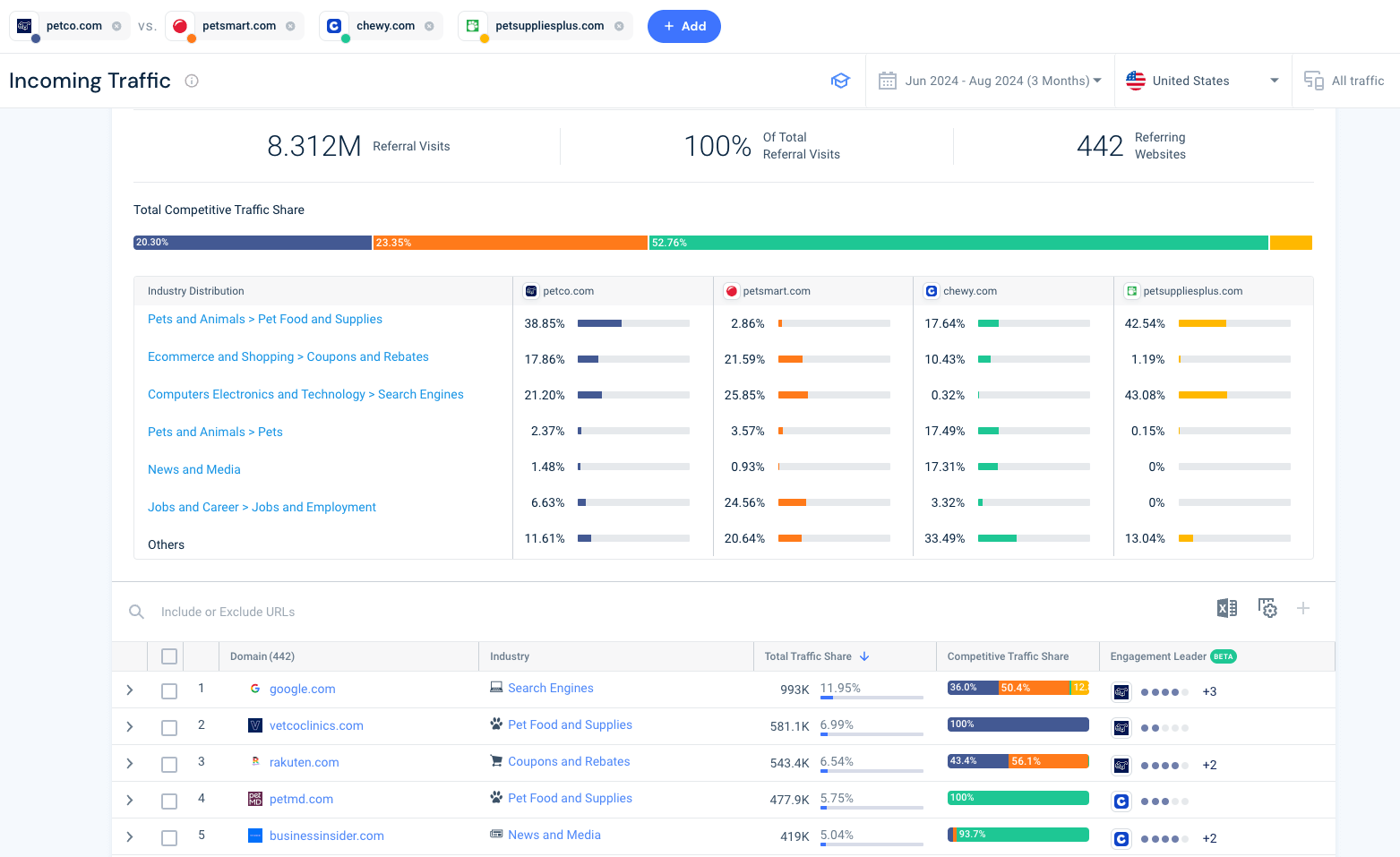
Similarweb analyzes 2 TB of data daily for market insights: traffic per domain, its sources, audience demographics & category benchmarks against the field. It's the digital intelligence platform for market-level questions, where the unit is websites rather than keywords.
Where it fits
Market intelligence reads: sizing rivals' traffic, watching channel mix & competitor visibility trends, and grounding the market trends debate in public web data.
Google's free pair
Google Ads Transparency Center shows any advertiser's running creative, free; Google Merchant Center benchmarks your shopping prices against the market. Neither is a full analysis tool, and both answer real questions weekly for nothing at all beyond the setup minutes.
Where they fit
Every program, as the zero-budget layer under whatever else you buy.
Choosing the best competitor analysis tool
Start from the surface that decides your deals. Price-led markets need the pricing lane first; organic-led businesses need the search lane; enablement-led sales motions need a competitive intelligence tool with battlecards. The best competitor analysis stack is two or three tools with jobs, and the best competitor analysis tool for you is the one aimed at the surface your revenue feels first.
Then test on your own market. Run the trials against your real rivals, on your real panel, & score each candidate on signal-per-alert: how much competitor activity it caught, how much noise it shipped alongside, how the raw data reads once exported. Historical data access matters more than demos suggest, since trend analysis needs a past.
Mind the seams. Competitor analysis tools that feed your CRM, Slack & dashboards multiply their own value; automated workflows beat another inbox, and performance metrics per tool, opens, clicks, actions taken, tell you within a quarter which subscriptions earn renewal.
Budget honestly across the stack. The competitive intelligence platform anchors serious programs, one SEO suite covers search, one social tool covers conversation, and the digital marketing tools you already pay for cover more monitoring than most teams realize.
The search & traffic lanes, read deeper
Keyword research on rivals answers the questions your own analytics can't: which queries they own, which they're buying, where the keyword rankings moved this month. The SEO suites turn competitor keyword rankings into a weekly scoreboard, and the movement matters more than the standings.
Content strategy reads follow. Content gaps name the topics rivals rank for & you haven't written; publishing velocity shows where their content strategy is funded; and the search results record every bet in public, dated by index.
Website traffic completes the lane. Traffic estimates per rival domain, sources & audience splits show whether their strategy converts attention, website traffic trendlines separate the growing from the loud, and the same panels feed market intelligence questions about category direction. Keyword research plus website traffic plus the social media platforms' engagement data triangulates a rival's whole acquisition engine from the outside.
The lane rewards patience. Search moves quarterly, market research on the demand side moves annually, and the competitor analysis tools that hold historical data turn both into trendlines; one year of captures outperforms any single crawl, in this lane more than any other.
The monitoring workflow
Build the panel
Identifying direct & indirect competitors is essential before any tooling: the direct rivals your deals name, the indirect ones your customers consider, one or two emerging entrants with funding & velocity. Multiple competitors per tier, none by habit.
Wire the feeds
Automated alerts help track competitor changes without excessive effort: competitor websites' diffs, keyword movements, press releases, review streams & social streams per rival. Track competitor prices daily, track competitor content weekly & let the tools carry the routine so people carry the judgment.
Route & respond
Findings need owners named in advance: pricing moves to pricing, launches to product, campaigns to marketing, everything deal-relevant to sales, and the ambiguous items to whoever runs the program. Continuous competitor analysis improves strategic responses to market changes only when the analysis reaches the responder while the response is still cheap.
Audit the watch
Regular audits of competitors keep the insights actionable & relevant: panels drift, rivals merge, new entrants arrive. Quarterly, reread the panel, prune the feeds, retire dead alerts & check what the competitor data changed last quarter; a watch nobody acts on is a subscription with a dashboard.
Free & low-budget monitoring
The zero-budget stack is real. Google Alerts on rival names, the Ads Transparency Center for creative, Merchant Center benchmarks for shopping prices, native social search per platform, a dated spreadsheet & one owner; teams monitor competitors credibly for months on exactly this.
The free tools list covers the full inventory. The free tier's weakness is memory & volume: nothing archives itself, nothing dedupes, and the analyst is the analysis tool; the trade works while the panel stays small.
Graduate deliberately. When the spreadsheet misses a week, or the panel passes five rivals, or a missed move costs a deal, the paid competitor analysis tools earn their line item; until then the discipline matters more than the software, and market trends read the same in a free feed as a paid one.
One habit transfers either way: score the watch monthly. Performance metrics for the monitoring itself, moves caught, moves missed, response time, keep the free stack honest & tell you when it stops being enough.
A worked quarter of monitoring
Week one: the feeds flag competitor activity on a rival's pricing page, a new tier fenced for enterprise. The capture is dated, routed to pricing the same morning & filed; their pricing strategy shifted mid-quarter, and the win/loss notes will say whether it works.
Week four: competitor research on the quarter's hiring shows the same rival stacking ML roles. Product gets the read; the roadmap debate cites the postings; nobody is surprised at the eventual launch, which is the whole product.
Week eight: competitor performance diverges in the traffic & review feeds, one rival gaining, one sliding, neither announcing it. The competitive intelligence digest pairs the two stories, and sales gets a talk track for each; track competitor trajectories long enough & the trajectory is the insight.
Week twelve: the quarterly audit. Competitor performance summarized per rival, competitor insights scored against what they changed, the panel pruned, one emerging entrant promoted to the watch. Track competitor moves this way for a year and the competitive intelligence file becomes the company's best-read document.
Nothing in the quarter required heroics. The feeds ran, the routing held, the actionable insights arrived while their subjects were still current; competitor research on this cadence is maintenance, and maintenance is the point.
Common monitoring mistakes
Watching without routing. The feed fills, the channel scrolls, nothing changes. Every alert needs a default owner before the tooling goes live, or the watch becomes a spectator sport with a subscription fee.
Copy-paste reactions. A rival's move is evidence about their situation, and their situation differs from yours. Matching a discount you can't afford, or a feature your customers never asked about, outsources your judgment to the least transparent decision-maker available.
Panel bloat. Twenty rivals watched shallowly produce alerts; six watched properly produce understanding. The audit exists to prune, and pruning is the most skipped step in the workflow.
Recency worship. This week's move reads as urgent because it's new, and the pattern across a year usually matters more. The archive corrects the bias, which is one more argument for competitor analysis tools that keep one.
Forgetting your own signal. Rivals monitor you too. Every page edit, price test & job posting your company publishes lands in someone else's feed, and teams that remember it time their announcements, stage their tests & stop leaking roadmaps in job descriptions.
Treating quiet as safe. A rival gone silent is often a rival building. Silence is a signal in the record like everything else, and the panels that track posting cadence catch the pre-launch hush that precedes the loud quarter.
Who consumes the watch
Sales takes the deal layer: competitor insights per rival, cards current, alerts on the accounts in play. The competitor analysis behind a battlecard is invisible to the rep & decisive in the call.
Marketing takes the campaign layer: rivals' messaging, engagement metrics per channel, launch timing. Competitive insights here prevent collisions & find the gaps campaigns can own, and the social media watch supplies half of it.
Product takes the roadmap layer: feature diffs, review complaints, the competitor analysis of what shipped against what customers wanted. Competitor intelligence at this altitude is mostly patience & filing.
Leadership takes the trendline: quarterly competitor analysis rollups, key metrics per rival, the moves that changed the map. Competitor intelligence briefings at this level cite the file, and the file exists because the feeds ran all quarter; that's the division of labor, machines watching competitor activity, teams converting it, the competitive intelligence compounding in between.
The ethics line
Using public information sources is the whole method: websites, filings, ads, reviews, job posts, public web data at large. Ethical competitor monitoring never needs deception, and the public record is richer than most teams have finished reading anyway.
The line stays bright in practice, and it stays cheap to respect. No misrepresentation, no scraping behind logins, no soliciting confidential material; competitive intelligence gathered cleanly is the only kind usable in the rooms where it matters.
The outputs the watch feeds
Battlecards first: per-rival, dated, sourced from the monitoring feed. The card is competitive analysis at deal speed, it decays without the watch behind it, and reps can tell the difference within two calls.
The quarterly competitive analysis second: what moved, why, what it predicts. The document writes quickly when the captures already exist; the same competitive analysis takes a sprint when they don't, which is the difference monitoring makes visible.
Profiles & maps third. The competitor profiles absorb the quarter's captures, positioning maps get redrawn from the messaging record, and market trends get an evidence trail instead of a vibes paragraph.
Alerts last & always: the real-time layer that never becomes a document at all. Most of the watch's value ships as ninety-second reads in Slack, and the competitor analysis tools that route well beat the ones that merely collect well; distribution is the feature the demos undersell.
Measuring the program
Score it on decisions & speed, in that order. Time-to-detection for rival moves, decisions citing the monitoring in writing, win-rate movement against tracked rivals & the market share trendline behind it all; benchmark performance quarter over quarter and the program grades itself.
Watch usage as the leading indicator: alert engagement, battlecard opens, requests from the field. Competitor tracking that the field stops reading predicts a stalled program two quarters before the win rates say so, and enables early detection of the stall while it's fixable.
Attribute honestly & the credibility compounds. Claim the wins the record supports, log the misses beside them, and the key insights keep their audience; oversell one quarter & the competitive insights read as marketing forever after.
Questions people ask
What is the best tool for competitor analysis?
By lane: Klue or Crayon for the full competitive intelligence watch, Ahrefs or Semrush for search, Sprout Social for social, Visualping for page changes, Prisync for commerce pricing. The best competitor analysis tool is the one pointed at the surface your revenue feels first; our ranking scores the dedicated platforms in depth.
What are the 4 P's of competitor analysis?
Product, price, place & promotion per rival, the marketing mix as a monitoring checklist. The six surfaces above are the 4 P's with hiring & digital presence added, because modern rivals leak on more channels than the textbook ever had names for.
What are the 4 types of competitors?
Direct, indirect, replacement & potential. Monitor the first two continuously, the third by category review, the fourth by funding announcements & hiring spikes, which is where potential becomes imminent.
How often should you monitor competitors?
Continuously by automation, weekly by human eyes, quarterly by audit. The tools watch in real time; the judgment layer needs a calendar, and the panel needs a review before every planning cycle.
The watch pays in accumulated ordinariness. Monitor competitors long enough & the market stops surprising you: market trends arrive pre-read, competitor behavior gets a baseline that makes anomalies visible, market positioning debates cite captures instead of memories, and your own strategy adjusts a quarter earlier than it used to. Competitor research becomes competitor knowledge, the competitive edge & competitive advantage compound quietly, and the market research & competitive research that once took a sprint per question sit one search away; that's what the best competitor analysis buys, and why the ongoing version beats the annual heroic one in every market where rivals keep moving, which is every market. Optimizing content strategies, pricing responses & campaign counters all inherit the same head start, market intelligence & competitive benchmarking sharpen against the same feed, and identify trends early enough & the response stops being a response at all; it's just your own strategy, arriving on time, informed by competitor mentions & competitive signals the whole market published & only your team filed. Track competitor moves on a calendar, keep the ethics clean, route everything, and the best competitor analysis tool in the stack turns out to be the habit; SEO performance, social media presence & market intelligence reads all improve downstream, and the competitive data keeps compounding while the competitive positioning debates get shorter, the content gaps close & the search visibility climbs.
SOURCES
- Surfer research brief for this page, including tool capabilities & market-size figures. Retrieved July 2026.
- Vendor documentation: Klue, Crayon, Visualping, Prisync, Sprout Social, Hootsuite, Ahrefs, Semrush, Similarweb & Google's advertiser tools. Accessed July 2026.
- Sources of competitive intelligence, competitiveintelligencetools.com, July 2026.