Social media monitoring: what it is, how it differs from listening & how to run it
Social media monitoring tracks conversations & mentions in real time across the social platforms: every post, comment & review that names your brand, your rivals or your category. The stakes are measurable, with 50.4% of users researching brands online before making purchases; the conversations happen whether anyone reads them or not.
Businesses have voted on the value. 83% of B2B and 85% of B2C businesses value social media monitoring tools, and the discipline has grown from a PR chore into standing infrastructure for support, product & competitive work alike.
This page covers what monitoring is, the difference between social media monitoring and social media listening, what to track, the five benefits, the setup, the tools & the competitive intelligence layer on top.
KEY FACTS
- 83% of B2B and 85% of B2C businesses value social media monitoring tools.
- 50.4% of users research brands online before making purchases.
- Monitoring provides alerts; listening uncovers deeper insights.
- Social media monitoring tools track mentions across 30+ channels.
- 46% of senior marketers needed data expertise by 2015.
What social media monitoring is
Social media monitoring is the systematic tracking of brand mentions, specific keywords & relevant conversations across social platforms, in real time, with alerts on what needs answering. It covers direct mentions, the tagged kind, and indirect ones, where people talk about the brand without tagging it.
The practice is older than the tooling & harder without it. Most platforms bury mentions in volume by design, monitoring tools surface them, and the businesses that skip both learn about their reputation from screenshots.
Why is social media monitoring important now specifically? Because the social media research phase moved: half of customers check the conversations before they check the website, and what they find is your brand as other customers describe it.
Social media monitoring vs listening
The terms travel together & mean different things, however often teams use the terms interchangeably.
What monitoring does
Monitoring is reactive by design: it tracks individual mentions as they happen & routes the ones needing action. A complaint gets an answer, a question gets support, a crisis signal gets escalated; monitoring provides alerts, and speed is its whole product.
What listening does
Social media listening analyzes conversation data for strategic insights: trends across thousands of posts rather than any single one. Listening is proactive & strategic, it looks at patterns where monitoring focuses on individual mentions, and listening reveals what markets want before tickets say so.
The working split
Monitoring answers today; social listening plans next quarter. Both monitoring and listening run on the same collected data, so the practical difference is the reader & the clock: community managers consume the alerts, strategists consume the analysis.
Run both. Tracking mentions without analyzing conversations wastes the archive; analyzing conversations without tracking mentions means slow answers; and the tools ship both modes anyway.
Social listening in practice
Social listening starts where the alert queue ends. The monitor collects; social listening asks the archive questions: which themes grew this quarter, which complaints cluster, what the category wants that nobody ships.
Listening reveals the shape of demand. Aggregated social media conversations show which features get requested across thousands of posts, sentiment analysis grades each theme, and the real time insights from monitoring become long-run direction; that's how social media listening turns noise into actionable insights.
The find-trends pass runs monthly. Social listening across the quarter's conversations will find trends no single week shows: language shifting, a competitor's name rising, a use case emerging in an industry adjacent to yours.
Social listening also grades your own moves. Campaign reactions, launch sentiment & the conversations happening after a pricing change all sit in the same archive, and social media listening reads them without a survey's lag or its politeness bias.
The output is a monthly memo, and the memo is why social listening outranks monitoring conversations in strategic value while depending on it completely: no archive, no analysis, no insights.
What to track
Mentions & keywords
Brand mentions come first: names, products, executives, common misspellings, the specific keywords buyers use. Keyword tracking across key terms catches the conversations happening without your handle in them.
Sentiment
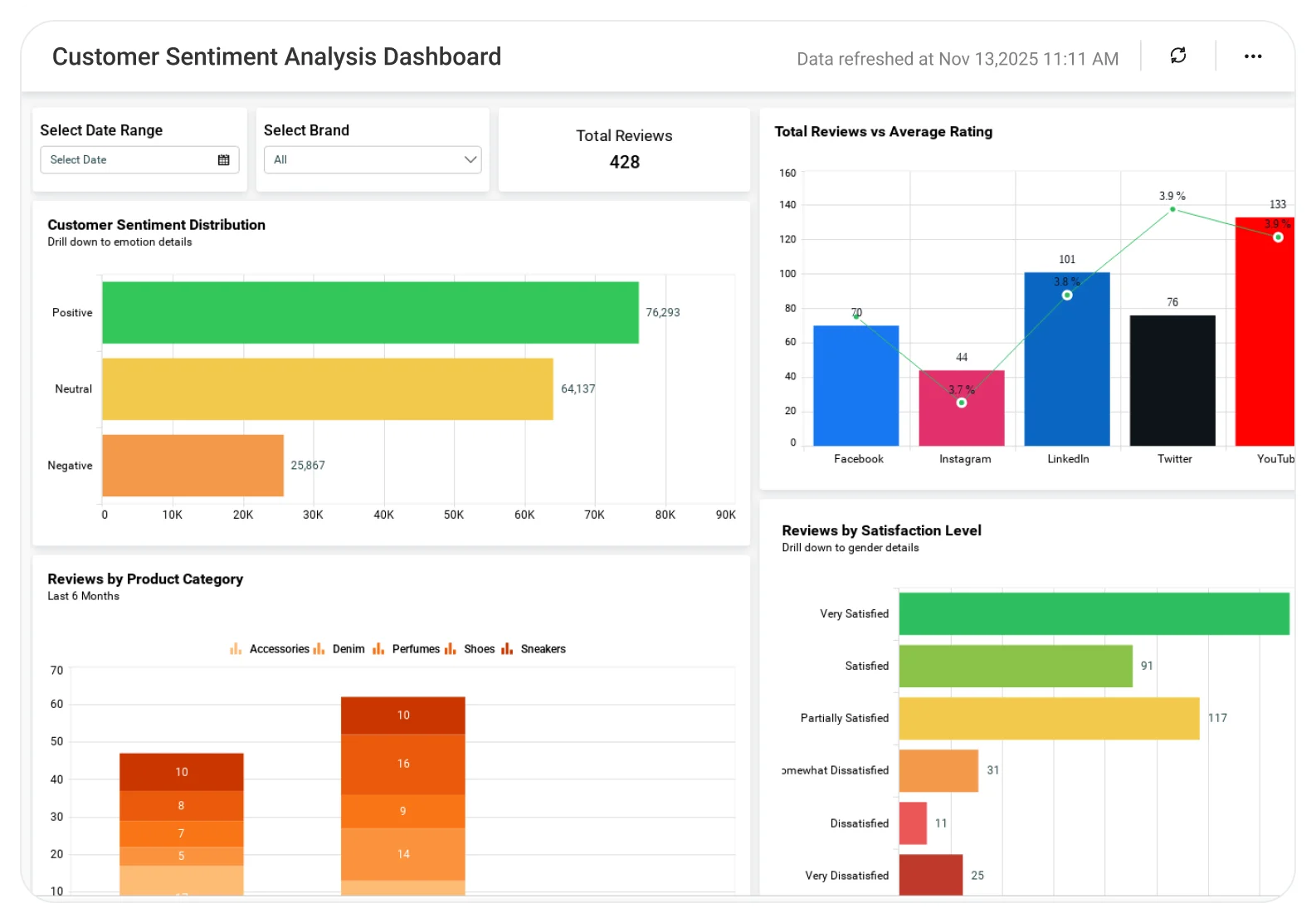
Sentiment analysis detects positive, negative or neutral mentions automatically, and measuring sentiment trends identifies shifts in public perception over time; a stable volume with souring tone is a different emergency than a spike.
Competitors
Monitor mentions of rival brands & products and the same feed becomes competitive benchmarking: their complaints are your objection-handling material, their praise is the bar, and share of voice math falls straight out of the counts.
Trends
Trending topics & emerging issues in the category are borrowed audiences; identifying trends early is how brands join relevant conversations while joining still reads as participation rather than ambush.
The five benefits of social media monitoring
1. Reputation management & crisis prevention
Social media monitoring is standing reputation management: negative mentions surface within minutes, real time alerts help manage crises & protect brand reputation, and fast responses to online feedback improve public perception measurably. Social media crises rarely announce themselves; they accumulate, and the monitor sees the accumulation.
2. Faster customer support
Monitoring improves response times to customer inquiries by routing them like tickets. Customer complaints get answered on the social channels where they were posted, important conversations get flagged for immediate attention, and monitoring tools help businesses manage customer support & engagement without a bigger team.
3. Product feedback at scale
Social media monitoring aids product development by gathering customer feedback nobody had to request. Customers narrate bugs, wishes & workarounds in public, and the large volumes of unprompted commentary beat any survey's sample size.
4. Trend detection & innovation
Identifying emerging trends gives businesses opportunities to innovate & improve before the category catches up. Long term trends show in the aggregate of social media that no individual posts reveal, which is where social media listening earns its keep.
5. Competitive visibility
The same feed that watches your brand watches the market. Competitor launches, campaign reactions & category complaints all pass through the monitor, the social lane of full competitor monitoring, and the competitive insights arrive free with the infrastructure already running.
What brands learn from each other
Brands read brands. A brand's social media content calendar is public strategy: launch timing, campaign themes, the audiences its posts court & the formats it bets on. Social media monitoring pointed at rival brands turns their feeds into a standing briefing that updates itself daily.
The key differences between brands show in responses, not posts. Which complaints a brand answers, how fast, in what tone, which it leaves hanging; customers notice all of it, and monitoring the exchanges teaches more about a brand's operations than its advertising ever will.
Industry patterns emerge across brands too. In one industry the conversations cluster on service, in another on price or shipping; social media monitoring across an industry's brands maps where the battleground sits, and the brand that reads the map gets to pick its fights instead of inheriting them.
Track three rival brands and the tracking conversations produce a feed of free lessons: campaigns that landed, apologies that didn't, formats customers reward, hashtags that died on arrival. Insights from other brands' experiments cost nothing, arrive weekly & spare your own brand the tuition.
How to do media monitoring
Step 1: the keyword set
Start with the keyword set: brand names, products, executives, competitors, category key terms & the misspellings of all of them. The set defines what the monitor can see, and it deserves a quarterly review, because product names change & so does the slang customers use for them.
Step 2: the channels
Pick the channels next. Social media monitoring tools track mentions across 30+ channels, from the major social media platforms to forums, review sites & news sites; monitor social media channels where your customers talk, which is rarely the full list.
Step 3: the routing
Wire the routing before the volume arrives. Complaints route to support with SLAs, sales signals route to sales, crisis patterns escalate; a monitor without routing is a feed nobody owns, and quickly identify only matters if somebody then quickly acts.
Step 4: the loop
Then close the loop monthly: what the social media monitoring caught, what insights the analysis found, what changed because of it. The 46% of senior marketers who needed data expertise by 2015 were early to a truth that hasn't moved, and only 17% of companies had integrated customer data by then; the integration is still where most programs stall, and analyze data across silos or the insights stay trapped in them.
A week of social media monitoring
Monday opens with the weekend's queue: brand mentions triaged, two customer complaints answered in public, one pricing question routed to sales. Twenty minutes, most of it reading.
Midweek the monitor catches a spike: a reviewer's video names the brand, conversations multiply, and sentiment holds positive. The social media monitoring feed routes the moment to marketing while it's still warm, and the community team joins the busiest threads with customers who are already convinced.
Thursday brings the other kind: negative mentions climbing around a checkout bug. Support gets the thread list, engineering gets the reproduction steps customers posted, and the public replies land before the tweet-length version of the story hardens into the story.
Friday ships the digest: mention volume, sentiment split, competitor chatter, insights worth escalating. The business reads five bullet points; the social media monitoring behind them read several thousand posts; that ratio is the product.
The tools
Sprout Social & the suites
Sprout Social anchors the category as a social media management suite: monitoring, engagement & analytics in one suite, with competitive reporting beside the inbox. Sprout Social's competitor reports read engagement rates & growth side by side, and the platform is the default recommendation for mid sized businesses.
What to demand from any tool
The key features to demand are stable across every tool: keyword tracking & sentiment analysis, real time alerts, multiple platforms per query, and reporting that separates individual posts from the aggregate. Most tools tier by mention volume & seats.
Choosing
The top tools trade off depth against effort, and no tool covers everything. Enterprise social media monitoring tools & social media management suites bundle publishing & monitoring; standalone social monitoring services go deeper on coverage; and the social media strategy underneath decides which trade to take. Match the tool to the total volume you'll process & the business goals the feed serves, not to the demo.
Metrics that matter
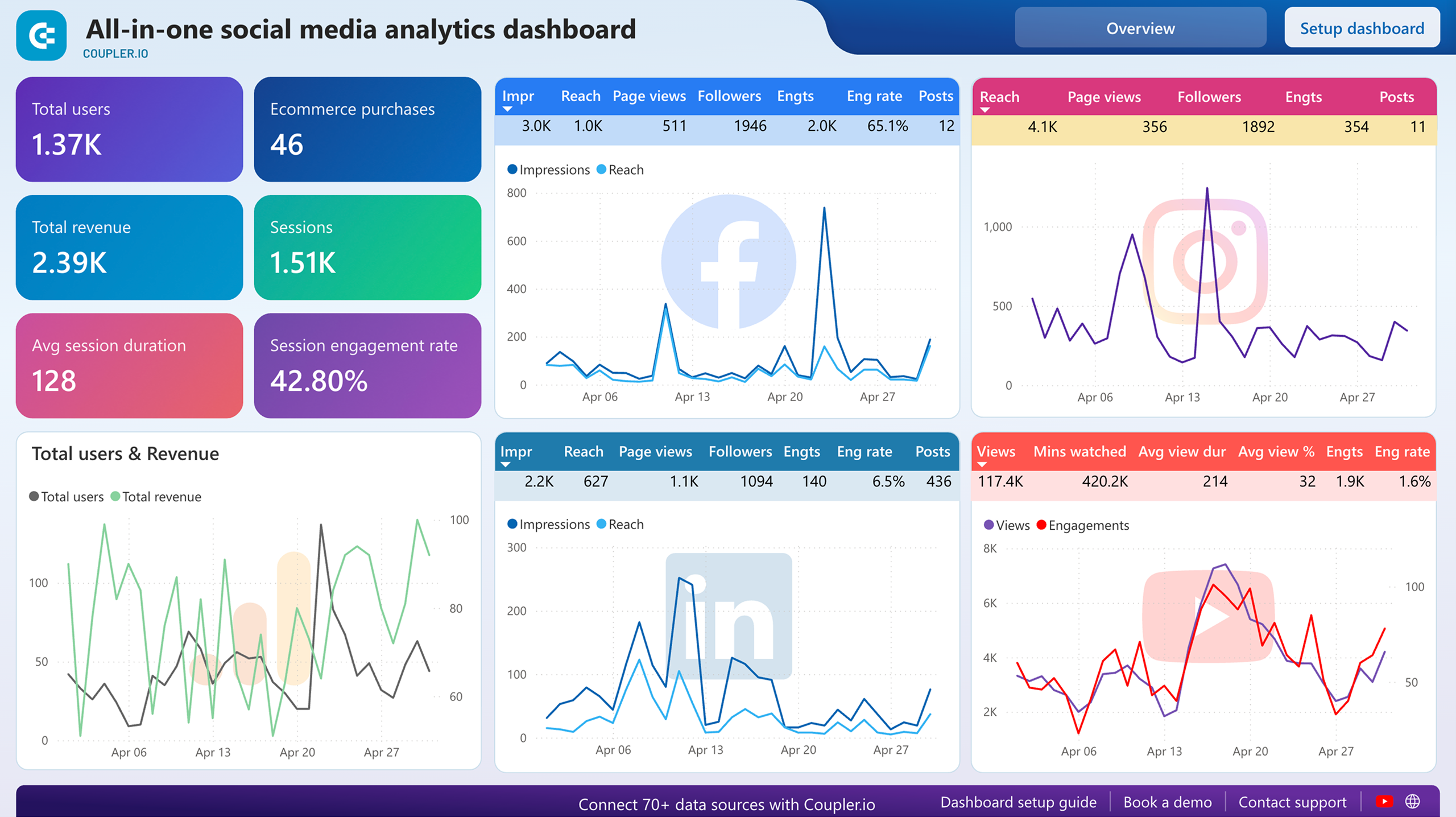
Volume first: total mentions per week, split by social platforms & channel & tracked against the total volume of category conversations, which is the share-of-voice read. Volume without the denominator flatters every brand in a growing industry.
Sentiment second: the positive-negative split, trended. The absolute number matters less than the drift, and negative sentiment concentrating around one theme is a roadmap item wearing a complaint.
Speed third: median response time to customer inquiries, in hours. Customers grade the industry's brands against each other on this number without telling anyone.
Yield last: insights escalated per month & what the business did with them. A monitor that catches conversations but changes nothing has an audience problem, not a data problem, and the insights only count when a strategy somewhere absorbs them.
Who owns it
Ownership is a social media question before it's an org-chart one. Small teams give the feed to whoever runs the social media accounts; larger ones split it, community handling the replies, insights teams handling the social listening, and the intelligence desk skimming the competitor lanes.
The split works when the archive is shared. One social media monitoring system, several readers, and the social listening memos citing the same data the community team answered from; separate tools per team recreate the silo problem the monitor was meant to solve.
Cadence completes it: daily triage, weekly digest, monthly social listening read, quarterly review of the keyword map & channel list. The rhythm costs a few hours a week & pays in every function the conversations touch, and the customers on the other end of the social media feed never know how much of the brand's responsiveness is just good plumbing.
Best practices
Answer fast & in public, on the social channels where the complaint lives. The audience for any complaint is the people who find it later, and the reply is for them as much as the complainer.
Track the meaningful conversations, not everything. A social media monitoring feed tuned to what the business can act on beats a firehose, and negative sentiment deserves triage tiers rather than uniform panic.
Keep humans on tone. Automation flags; people respond; and the social media accounts that feel human under pressure convert critics publicly, which is the cheapest marketing strategy on social media.
Feed the findings sideways. Support themes go to product, campaign reactions go to marketing, competitor chatter goes to the intelligence desk; the monitor pays for itself in the departments that never log into it, and the marketing campaigns & campaign strategy improve on data the marketing strategy meetings never used to have.
The competitive layer
For competitive intelligence, social media monitoring is a listening post on rivals' customers. Their mentions carry churn signals, feature complaints & pricing gripes in public, and social media is where dashboards get their earliest warnings.
The competitive read pairs monitoring with share of voice: mentions tell you what the market says, the share math tells you who it talks about, and sentiment splits tell you who it prefers, and the insights stack quarter over quarter. Digital channels leak strategy continuously, and the brands that read the leak respond quarters early.
Route it like intelligence: dated captures, sourced claims, findings into the competitor profiles & battlecards. The competitive intelligence tools in our ranking ingest social feeds beside websites & reviews, and the pairing covers the market conversation end to end.
Questions people ask
What is the best social media monitoring tool?
Sprout Social for the balanced suite, specialist listening platforms for depth, native platform tools for zero budget. The honest answer depends on volume, channels & who reads the output; demo against your own brand's noise, not the vendor's example.
What is the difference between social listening and social monitoring?
Social monitoring watches & responds to individual mentions in real time; social listening analyzes the accumulated conversations for trends & strategy. Alerts against insights, reaction against planning, same data underneath.
What is the 5-5-5 rule for social media?
A pacing heuristic with several versions; the common one caps a daily engagement session at five interactions with customers, five with prospects & five with industry voices. It exists to keep engagement habitual without letting it eat the day.
What is the 40-40-20 rule for social media?
A content-mix guideline: roughly 40% of posts serve the audience's interests, 40% engage the community & curate, 20% promote. Versions vary, and the point survives them all, which is that feeds built entirely from promotion get ignored.
How can I monitor my child's social media?
Different problem, different tools: the platforms' built-in family & supervision features, device-level parental controls, and, more durable than either, a standing conversation about what they're seeing. The commercial monitoring tools on this page are built for brands, not families.
Why should social media be monitored at all?
Because the conversations happen regardless, half of customers read them before purchasing, and unanswered complaints compound. Social media monitoring is the difference between being discussed & being present for it.
The discipline compresses to a habit: watch the channels where your customers & your rivals' customers talk, answer what needs answering fast, and analyze the archive for the strategy layer underneath. Social media monitoring earns its budget in the first crisis it catches early; social media listening earns its own in the first roadmap it redirects; and the business that runs both holds a standing insights advantage over every brand still finding out from screenshots, in an industry where social media monitoring itself long since became the price of entry.
SOURCES
- Surfer research brief for this page, including the adoption, research-behavior & data-expertise statistics. Retrieved July 2026.
- Sprout Social product documentation, competitive reporting features. Accessed July 2026.
- Share of voice: formula & channels, competitiveintelligencetools.com, July 2026.