Share of voice: formula, channels & how to raise it
Share of voice is a key marketing metric that measures a brand's visibility & presence in the market compared to its competitors. It's expressed as a percentage of total industry visibility or conversation that a brand owns compared to its competitors, and it answers the question dashboards can't: of all the attention this market pays, how much is ours.
The metric predicts money. A 10% increase in share of voice can generate 0.5% market share growth, which makes share of voice the rare entry among brand metrics with a revenue conversion rate attached.
This page covers the formula, the four channels it gets measured on, the relationship to sales, how to find share of voice with the tools you already have & what moves the number.
KEY FACTS
- Formula: brand mentions divided by total industry mentions, times 100.
- A 10% increase in share of voice can generate 0.5% market share growth.
- Four measurement channels: paid advertising, social media, public relations & organic search.
- Share of voice acts as a predictor of future growth in share of market.
- Share of voice analytics reveal where competitors dominate conversations.
What share of voice means
Share of voice tracks brand visibility compared to competitors, across whichever channel you point it at. Mentions, impressions, coverage & rankings all reduce to the same question: your slice of the market conversation, as a percentage.
The metric earns its keep as a denominator. Raw mentions rise & fall with the news cycle; a brand's share of the total moves only when you gain or lose ground against competitors, which is why share of voice reveals competitive positioning gaps that absolute numbers hide.
It's also a planning tool. Share of voice is used to evaluate market presence & plan future growth strategies, it can inform PR budget & resource allocation, and tracking it over time shows the impact of marketing campaigns & budget allocation effectiveness, which is why measuring share on a calendar beats measuring it on curiosity.
The share of voice formula
The formula is one line: share of voice equals brand mentions divided by total industry mentions, multiplied by 100.
Worked through: if the category conversation this month holds 2,000 mentions across you & your direct competitors, and 400 name your brand, your share of voice is 400 ÷ 2,000 × 100, or 20%.
Calculating share this way works on any unit. Swap mentions for impressions, keyword rankings, or headlines and the arithmetic holds; the discipline is keeping the denominator honest, meaning the same competitors & the same channels every period.
Measuring share consistently beats measuring it broadly. A stable panel tracked monthly produces a trendline; a shifting panel produces a number that means nothing twice.
Share of voice by channel
The marketing channels for measuring share of voice include paid advertising, social media, public relations & organic search, and each answers a different question about brand visibility.
Social media share of voice
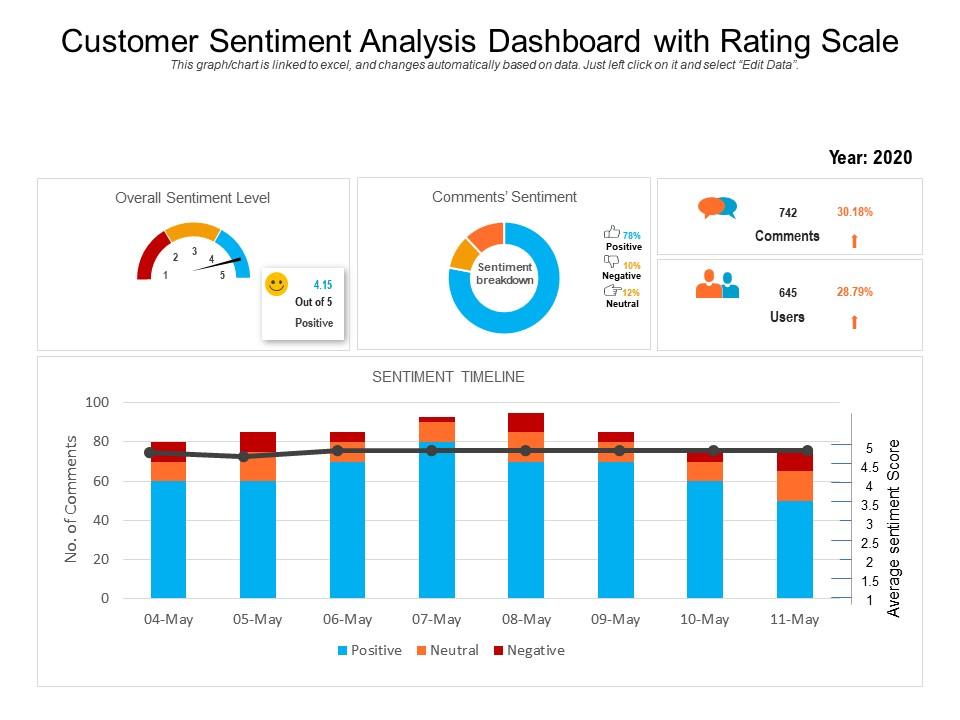
Social media share of voice measures mentions across various social media platforms: the brand's share of the social media conversations in the category, brand mentions against the total. Social listening tools count the market conversation for you, tag brand sentiment on each mention & split the social media SOV by network, campaign or region.
Sentiment analysis matters here because volume alone misleads. A spike of negative social media mentions raises your share of voice & lowers your brand reputation at the same time; read the two together, and let sentiment analysis label which kind of loud you are; social media SOV without sentiment is a volume knob.
SEO share of voice
Measuring SEO share means measuring who owns the search engine results for the relevant keywords a market types. Rank-weighted visibility across your keyword set, divided by the total, gives the brand's share of the results pages; organic search is the one channel where the conversation is fully countable.
Organic traffic estimates per domain make the same comparison in website traffic terms, and search visibility trendlines show whether content investments are converting into presence. The metric moves slowly & compounds, which suits it to quarterly reads.
PPC share of voice
PPC share runs on impression share: the impressions your ads received divided by the potential ad impressions they were eligible for. Google Ads reports it natively; add impression share columns in your Google Ads account and the PPC share of voice appears next to spend.
Impression share also itemizes the loss. Budget-lost & rank-lost splits tell you whether competitors outspend you or outrank you in the auction, which prices the fix; online advertising is the one channel where buying more share of voice is a settings change, budget permitting. Google Ads makes the ceiling visible too, since 100% impression share means every eligible auction showed your ad.
Media & PR share of voice
Media share of voice tracks brand mentions in news & publications: the brand's share of headlines against the category's, weighted by media outlets' reach where the tooling allows. Media monitoring tools count media coverage across news articles, trade press & traditional media, and the pr team's message pull through, how much of the coverage carries your framing, grades quality beside quantity.
Traditional media still moves categories in the media outlets where trust concentrates, and media coverage share is the metric that catches a rival's press push the week it starts, sometimes pegged to local events & product moments the wire never explains.
Share of voice vs market share
Share of voice measures brand visibility; market share measures total sales volume of a brand in the market. Attention on one side, money on the other, and the gap between them is strategy information.
The link runs forward. A higher share of voice indicates higher visibility & awareness, suggesting better sales potential ahead; share of voice acts as a predictor of future growth, and the 10%-to-0.5% conversion gives the relationship a working exchange rate.
The excess-share logic follows: a brand whose share of voice exceeds its share of market is positioned to grow, and a brand stacks the odds against itself when its voice number runs below its sales position. Higher share of voice often leads to increased brand recognition first, and the sales data follows with a lag.
Share of voice vs share of search
Share of search is the narrow cousin: your brand's share of search engine queries for brands in the category, usually measured from search volume data. Share of voice spans every channel a market talks in; share of search reads one high-intent slice of it.
The difference is breadth against purity. Search share moves on demand & is hard to buy directly, which makes it a clean predictor; share of voice includes mentions across various media channels, paid & earned alike, which makes it the fuller picture & the noisier one.
Use them together: share of search for the demand trend, share of voice for the visibility war producing it. When both rise, the brand appears to be genuinely gaining; when voice rises & search doesn't, the spend is renting attention that isn't converting into interest.
How to find share of voice
Measuring share of voice starts with the channel, then the counter. Social platforms get social listening tools with competitive benchmarking features; search gets an SEO platform's visibility report on your relevant keywords; paid gets the impression share columns; press gets a media monitoring service.
Define the panel before the tooling. The same direct competitors, the same channels, the same target audience definitions every month; the voice data is comparative by definition, and the comparison is only as good as its consistency.
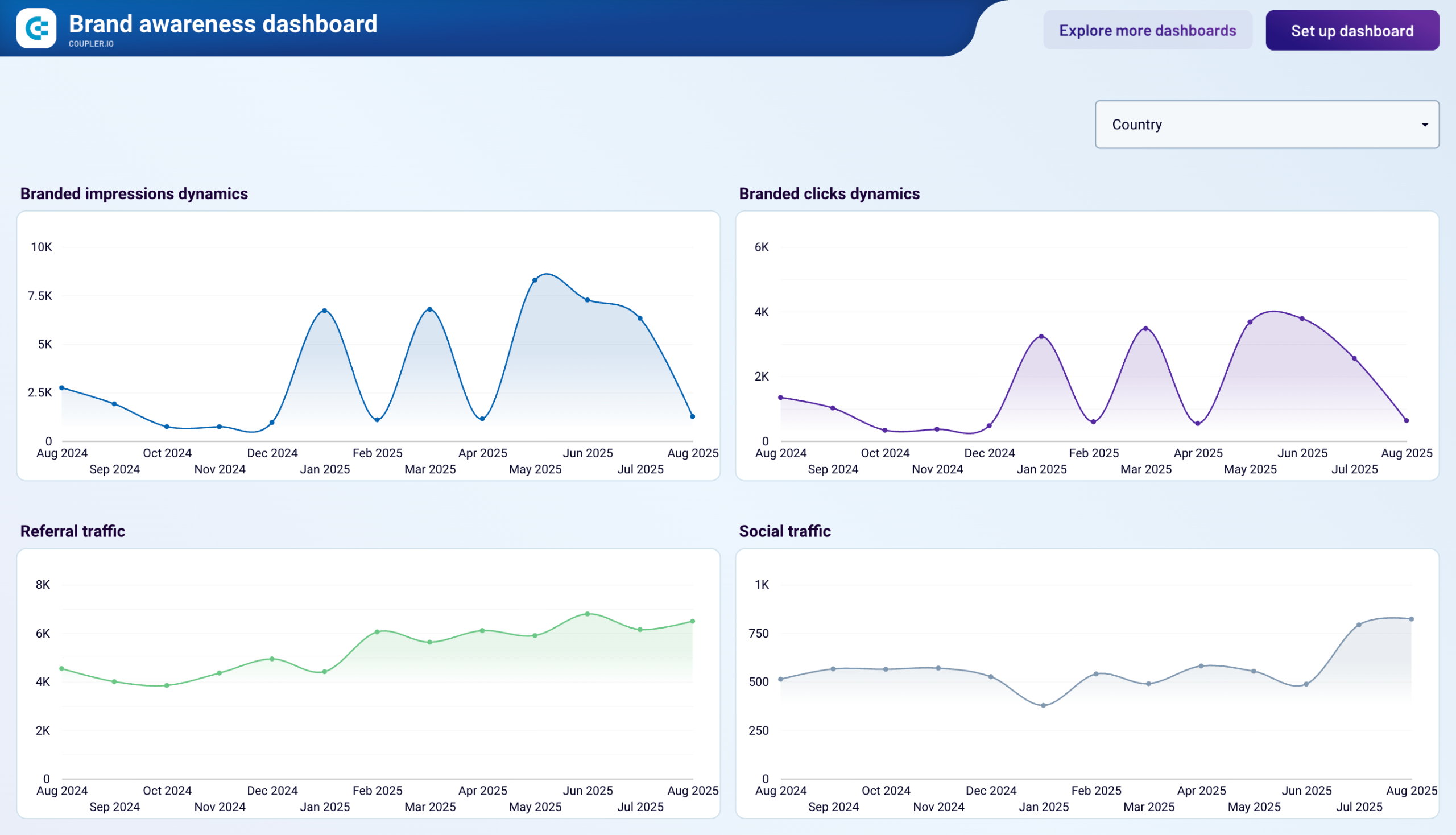
Then automate the read. Most social media accounts' native analytics stop at your own numbers, so the share of voice tools earn their fee on the denominator: the industry conversations you're not in. Share of voice analytics can reveal where competitors dominate conversations, which is precisely the part your own dashboards can't see & the reason it belongs in any competitor monitoring stack, and where the next campaign's opportunity usually hides.
Report it as a trendline with annotations. Voice data & voice metrics dated against launches, campaigns, industry trends & the latest industry news explain themselves; a lone percentage explains nothing.
How to increase share of voice
Buy it
Investing more in paid advertising increases brand visibility immediately, and digital advertising is the only lever with a same-week effect; the impression share report even names the auctions you're losing.
Earn it
Creating high-quality content increases mentions & engagement, compounds through organic search & gives the brand's presence in industry conversations something to anchor on; content is how seo share gets bought with effort instead of budget.
Deputize the workforce
Employee advocacy programs boost share of voice measurably, because a few hundred employees sharing beats most owned social media accounts on reach, and their networks trust them more than they trust the brand, and those networks overlap the target audience more than most media buys manage.
Show up fast
Monitoring trends in real time helps brands join relevant conversations while they're still conversations; people talking about a category topic are a borrowed audience, and the brands that arrive first take the largest slice of the room. The pr team earns share in the same way, pitching while the story is warm.
Hold the gains
Share of voice connects brand-building activities to visibility shifts, so the marketing strategies that moved the number get funded again & the ones that didn't get retired; that's the budget loop the metric exists to power, across every one of the different marketing channels it covers.
Reading the percentages
100% share of voice means you own the entire measured conversation: every mention, impression or headline in the panel is yours. It happens in niches & nowhere else, and in paid it means winning every eligible auction.
50% SOV means half the measured conversation names your brand, one voice in two. Against one rival that's parity; against five, dominance; the panel defines the meaning.
A good share of voice percentage is relative, and the honest benchmark is your own share of market. Voice above your market position signals growth pressure; voice below it signals a brand living off past momentum, and industry leaders watch the gap more than the level; total market metrics like these only mean anything against your own baseline. Where your own brand stands against that line matters more than any category average.
Questions people ask
What does share of voice tell you?
Where your brand sits in the market's attention, channel by channel: how visible you are versus competitors, whether campaigns moved the needle & where rivals own the conversation. Read over time, it tells you whether brand performance is building toward market share or coasting.
What does share of voice mean in SEO?
Your rank-weighted share of the visibility available across a keyword set: the percentage of clicks or impressions your domain captures versus the total on offer. It's measuring seo share of the results pages rather than of mentions.
What is SOV and SOM?
SOV is share of voice, your slice of the market's attention; SOM is share of market, your slice of its sales. The classic planning read compares them: SOV above SOM predicts growth, SOV below it predicts erosion, and the brand versus competitors picture is clearest when both sit on one chart.
What is the difference between share of shelf and share of voice?
Share of shelf is retail physics: the fraction of shelf space your products occupy in stores. Share of voice is attention. One constrains what shoppers can grab, the other shapes what they walk in wanting.
What is the 3-3-3 rule in marketing?
A content-pacing heuristic with several versions; the most cited splits output into thirds, one third promoting your own brand values & offers, one third sharing others' content, one third joining conversations. It exists to stop feeds from becoming press-release streams, which quietly helps share of voice too.
What is the 80/20 rule of SEO?
The Pareto version: roughly 80% of organic results come from about 20% of the work, usually a minority of pages & relevant keywords. For share of voice it argues for defending the head terms that carry most of your organic traffic & search visibility before chasing the tail.
How do I calculate the share of voice on a small budget?
Manually, one channel at a time: count your brand mentions & your competitors' across a fixed week, divide, and repeat monthly. Calculating share by hand caps the panel size, but the trendline works the same, and market research interns have run worse jobs.
What is a good cadence for share of voice reporting?
Monthly for social & press, where the conversation turns fast; quarterly for SEO, where movement is slow; continuously for paid, where the Google Ads columns update themselves. Annotate every report with what the marketing campaigns did that period, or the voice measures read as weather.
The metric's whole value is the denominator. Your numbers alone describe you; your numbers over the market's describe the fight, and share of voice is the cheapest honest read on how the fight is going, channel by channel, month by month. Wire it once, keep the panel stable, route the trendline into the budget meeting; the marketing strategies & digital marketing spend get smarter the quarter the voice share number starts attending, and the social mentions, rankings & headlines it counts stop being anecdotes & start being a scoreboard on the brand's position.
SOURCES
- Surfer research brief for this page, including the SOV-to-market-share conversion & channel definitions. Retrieved July 2026.
- Google Ads impression share documentation. Accessed July 2026.
- Measuring a CI program, competitiveintelligencetools.com, July 2026.